
Bleach sterilization is a proven way to decontaminate seeds, but timing and technique matter. Learn the best practices, limitations, and step-by-step instructions to avoid common pitfalls.
Why Use Bleach Treatment?
Surface sterilization is critical for growers managing high-value crops, rare genetics, or seeds from untrusted sources. Bleach (sodium hypochlorite) disrupts microbial cell walls, killing viroids, viruses, fungi, and bacteria on the seed coat. However, it won’t touch internal pathogens—so pairing it with other treatments (like hot water soak) may be necessary for full protection.
Key Considerations
-
No effect on germination: TUMI Genomics studies confirm bleach treatment doesn’t harm viability—if done correctly.
-
Not for all seeds: Avoid bleach if seeds are pre-treated with fungicides or hot water.
-
Timing is critical: Treat seeds immediately before planting; stored bleach-treated seeds (especially cannabis) may lose vigor.
-
Test first: Always trial a small batch before scaling up.
How to Bleach Sterilize Cannabis Seeds
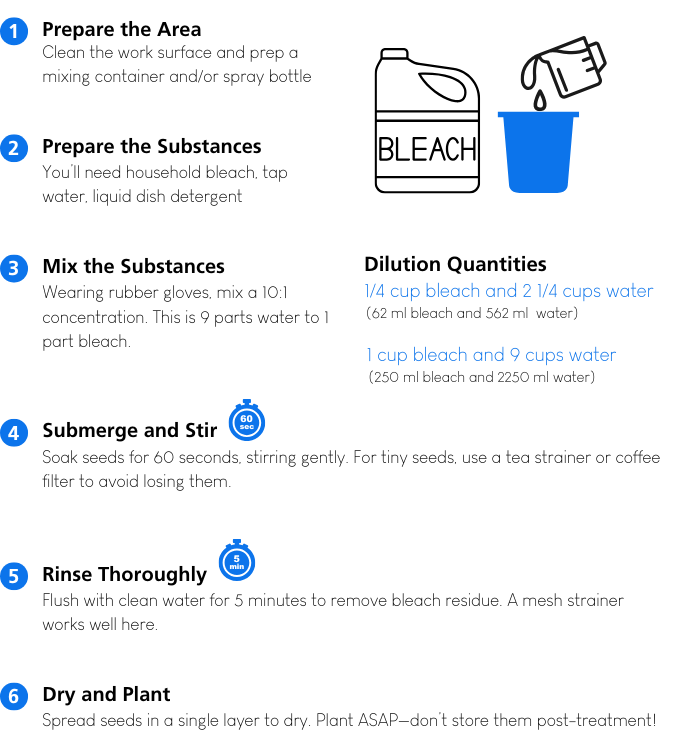
Best Practices for Safe and Effective Seed Sterilization
Surface sterilization with bleach is a simple yet powerful tool to protect your seeds from harmful pathogens—if you follow the right steps. Remember:
-
Always test on a small batch first to avoid losing valuable seeds.
-
Never store bleach-treated seeds—plant them immediately for best results.
-
Pair with other treatments (like hot water soaks) for comprehensive cannabis pathogen control.
Whether you’re working with high-value crops or just prioritizing plant health, mastering sterilization ensures a stronger start for every seed. Ready to dive deeper? Follow our guide on sterilizing your coco for a sterile growing medium.
References
-
Anabestani, A.; Behjatnia, S.A.A.; Izadpanah, K.; Tabein, S.; Accotto, G.P. Seed Transmission of Beet Curly Top Virus and Beet Curly Top Iran Virus in a Local Cultivar of Petunia in Iran. Viruses 2017, 9, 299. https://doi.org/10.3390/v9100299
-
Jarugula, S., Wagstaff, C., Mitra, A., Crowder, D. W., Gang, D. R., and Naidu, R. A. 2023. First reports of Beet curly top virus, Citrus yellow vein-associated virus, and Hop latent viroid in industrial hemp (Cannabis sativa) in Washington State. Plant Dis. 107:2897. https://doi.org/10.1094/PDIS-12-22-2981-PD LinkGoogle Scholar
-
Crosier, W. F. “RHIZOCTONIA SOLANI IN SEEDS OF SMALL GRAINS AND OTHER PLANTS.” Proceedings of the Association of Official Seed Analysts, vol. 58, 1968, pp. 111–17. JSTOR, http://www.jstor.org/stable/23432233
-
Rivedal HM, Temple TN, Thomas W, Ocamb C, Funke C, Skillman V, Jones G, Shrestha G, Kc A, Dung JKS, Frost K. First report of Spiroplasma citri associated with disease symptoms in field-grown hemp (Cannabis sativa L.) in the Pacific Northwest. Plant Dis. 2023 Sep 8. doi: 10.1094/PDIS-07-23-1419-PDN. Epub ahead of print. PMID: 37682222
About TUMI Genomics
TUMI Genomics is a biotechnology company specializing in advanced pathogen detection and genomic solutions. Their flagship product, the TUMIGlow on-site testing device, is designed to support agricultural industries with precise, efficient, and reliable testing technology.
Sales Inquiries: Luke Horst, Sales Director